
The author of the article
Ruzanna, 17 Years of Experience
August 29, 2025
What have you heard about UV or LED eyelash extensions and would you want to know more about this innovative technology? Instant drying of the glue, incredible resilience and reducing irritation, sound tempting? Many experts are already calling this method a “revolutionary achievement”.
Let’s figure out what actually are UV/LED eyelashes and what are their real advantages, safety and differences from classic extensions. This expert analysis will help you make an informed choice.
UV and LED Lashes – Everything a Client Needs to Know
| Section | Read to get |
|---|---|
 Understanding the Technology – How Does UV/LED Extension Work? Understanding the Technology – How Does UV/LED Extension Work? |
Explanation of the science of UV/LED curing. Special oil glue with photoinitiators and UV/LED lamps. Brief overview application process. |
| Advantages of UV/LED Extensions – Why is this popular? |
Analysis of the main advantages for the client.The speed of the procedure is increased durability and reduction of glue evaporation and immediate water and oil resistance. |
| Security Profile – Risk Assessment |
Comprehensive consideration of security issues. Improvement of UV/LED on the eyes and skin, with protective measures and glue safety regulations. |
| Comparative Analysis – UV/LED or Classic? |
Straight Comparison of UV/LED extensions with traditional methods by key parameters. Saving time,durability, evaporation, initial care and price. |
| Practical Aspects – Cost and Availability |
Look at the cost of UV/LED services and equipment. Accessibility of technologies In salons and expected lifespan of eyelashes. |
| Experts and Consumers’ Opinions |
Overview of reviews from professionals and clients. Analysis of common delusions about these technologies. |
How Does UV/LED Eyelash Extension Work?
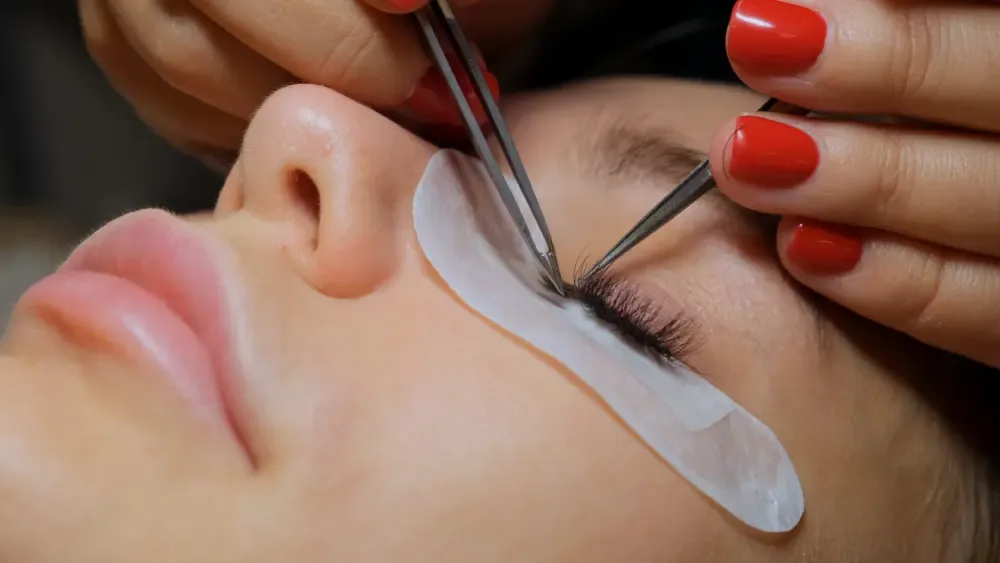
UV/LED eyelash extensions use specialized glue, which hardens (polymerizes) under the influence of light from UV/LED lamps.
Science of UV/LED Curing. Adhesives for these technologies contain photoinitiators. These substances absorb light from the lamps(usually UV-A range, 395-405 nm) and initiate rapid polymerization. The glue hardens in 1-3 seconds, forming a strong bond. Which is different from traditional glues that take 24-48 hours to dry under the influence of moisture.
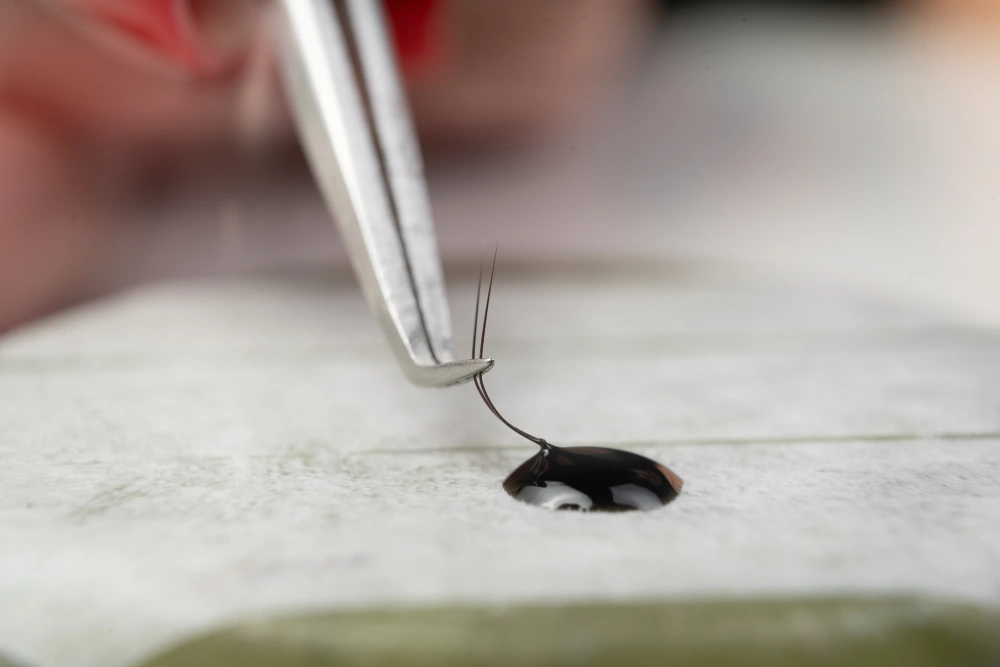
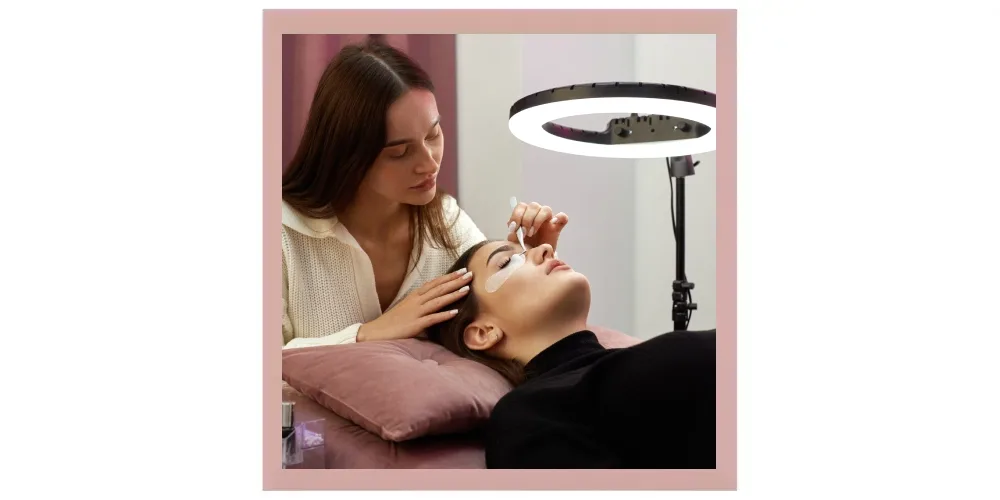
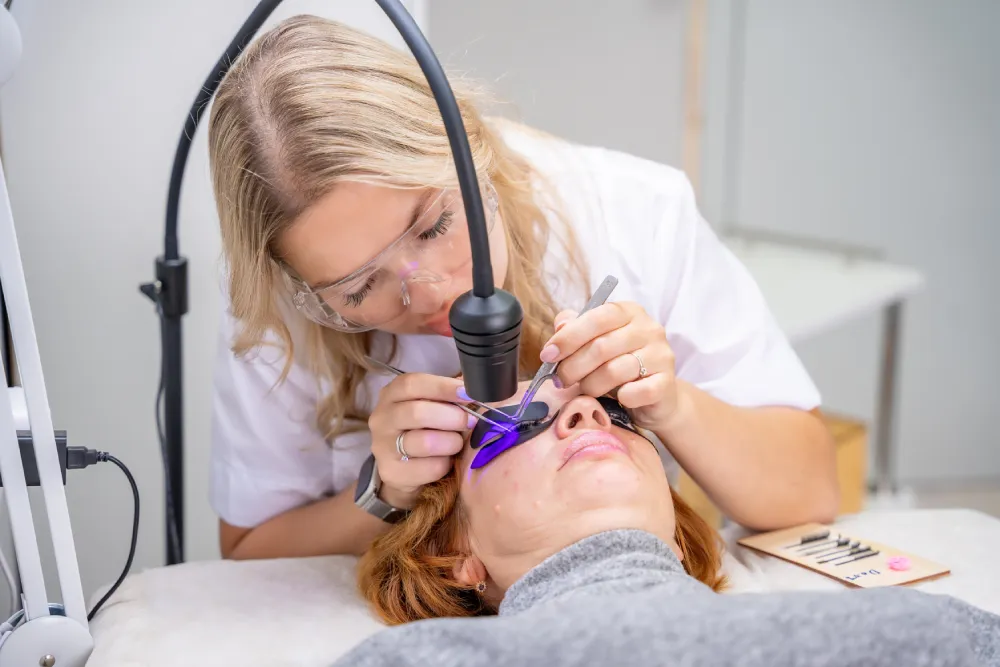
Application Process. Eyelash preparation is standard. The master positions the lamp, isolates the natural eyelash, applies the artificial eyelash with a drop of UV glue and activates the light for a few seconds causing instant curing.
Main Equipment. The UV/LED lamps(floor-standing, with flexible legs, foot control, low power 5-10 W) and special light activated adhesives.

Ruzanna
17 years of experience
Important
Most manufacturers recommend using the lamp and glue as a unified system for optimal efficiency and safety.
UV/LED Extensions – Why is this popular?
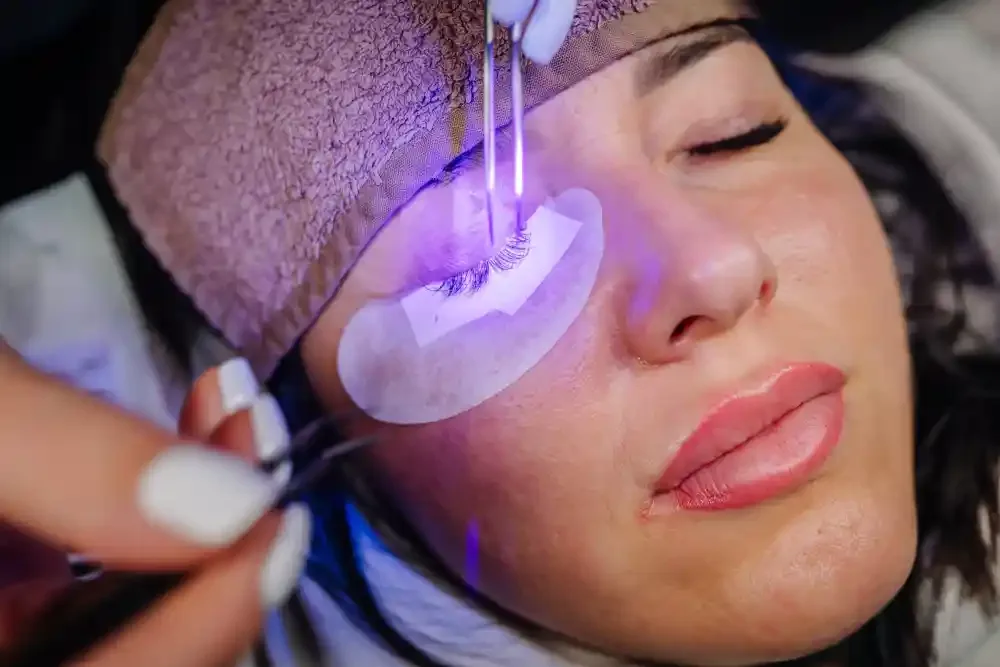
New technology offers customers a number of significant advantages.
| Advantage | Details |
|---|---|
| Speed |
Instant curing (1-3 seconds per lash) eliminates the wait for drying the glue. It can reduce the overall procedure time by 20% or more. There is no need for bonders. |
| Excellent Durability and Longevity | Stronger and more flexible grip thanks to full polymerization. Eyelashes can last significantly longer (claims of 6-8 weeks). Correction may be required less frequently (every 3-4 weeks). |
| Reduced Adhesive Fumes and Irritation | Instant curing minimizes the release of volatile compounds from glue. This leads to a more comfortable procedure for the client and masters. Less redness of the eyes, lacrimation. Potentially suitable for clients with sensitivity to traditional glues. |
| Instant Water and Oil Resistance | There is no “24-48 hour rule”. Clients can wet their eyelashes immediately, visit a sauna, and use oil products. This is a significant convenience. |
| Independence from Environmental Conditions | Characteristics of the glue at curing do not depend on humidity or temperature in the room. This ensures more stable and predictable results for masters. |
Yelena
7 years of experience
Noteworthy
In spite of reducing irritation from fumes, the main allergen (cyanoacrylate) is often present in UV adhesives, so the risk of allergic reaction is not completely excluded.
Security of UV/LED Extensions – Risk Assessment
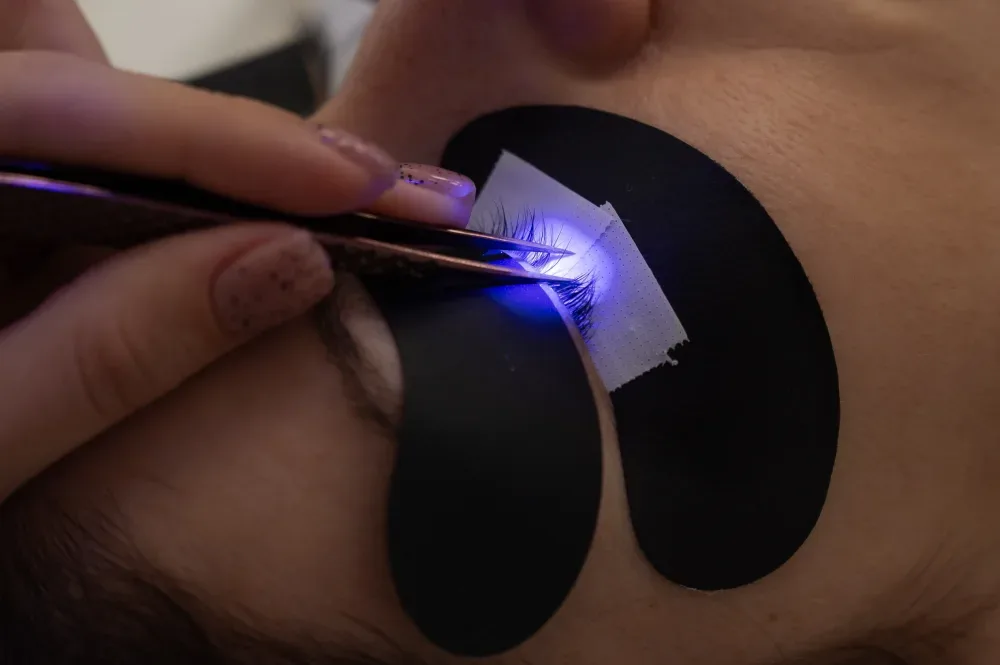
Application of UV/LED technologies raises questions about security.
-
Exposure to UV/LED Light. Low power (5-10W) UV-A light (395-405 nm) is used. Manufacturers claim the safety due to the short exposure time (2-3 sec/eyelash) and the beam directed at closed eyelids. It is important to use certified lamps.
-
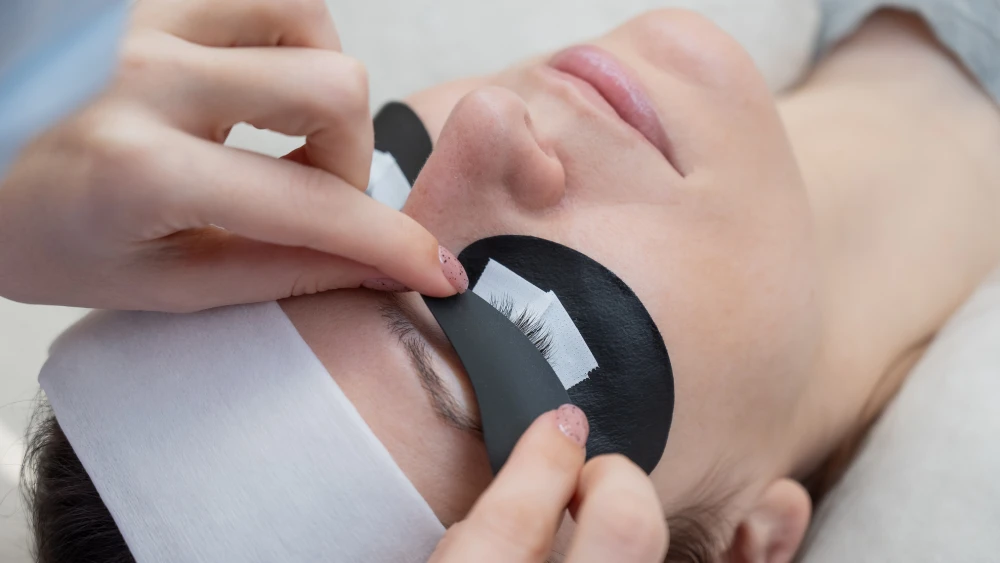
Protective Measures. For the client – tightly closed eyes, UV-blocking patches on the eyelids. For masters– UV400 protective glasses.
-
Glue Safety. UV adhesives contain cyanoacrylates and photoinitiators. Instant curing reduces evaporation but does not eliminate the risk of allergies to cyanoacrylate. Patch test is recommended.
-
Regulations. The US FDA does not regulate adhesives for eyelashes as a medicine (except Latisse).Regulation In Canada (Health Canada) and the UK (HSE) concerns general security cosmetics and UV devices, but specific standards for UF/LED are under development.

Natasha
12 years of experience
Carefully
Choose masters, who have undergone special training working with UV/LED systems and using certified equipment.That is the key aspect general safety of eye procedures.
UV/LED vs Traditional Extensions
| Characteristic | UV/LED Eyelash Extensions | Traditional Eyelash Extensions |
|---|---|---|
| Glue Curing Time | instant (1-3 sec). | slower (24-48 h). |
| Durability/Longevity | usually longer. | standard. |
| Fumes/Irritation from Glue | usually lower. | higher |
| Initial Care (water/oils) | There are no restrictions. | should be avoided for 24-48 hours. |
| Cost of Service | It may be higher. | standard. |

Ruzanna
17 years of experience
Important
UV/LED technology offers explicit advantages, speed and resilience, But price may be higher, and questions about the long-term UV safety, require further research.
Cost and Availability of UV/LED Extensions
Cost of Services. UV/LED extensions usually are more expensive than traditional ones. For example, in the US, prices can range from $190 for a classic to $260-$310 for volumes. Correction may also be more expensive.
Availability. Technology Is actively conquering the market, but is not yet available in all salons.
Expected Service Life. More often the claimed durability is(up to 6-8 weeks), corrections – every 3-4 weeks. However, this is individual.
Yelena
7 years of experience
Noteworthy
implementation of UV/LED technologies requires masters investments in new equipment and changes in progress, which can be reflected in prices.
Before choosing UV/LED extensions It is important to pass quality consultation with a master.
Conclusion – The Prospects of UV/LED Eyelash Extensions
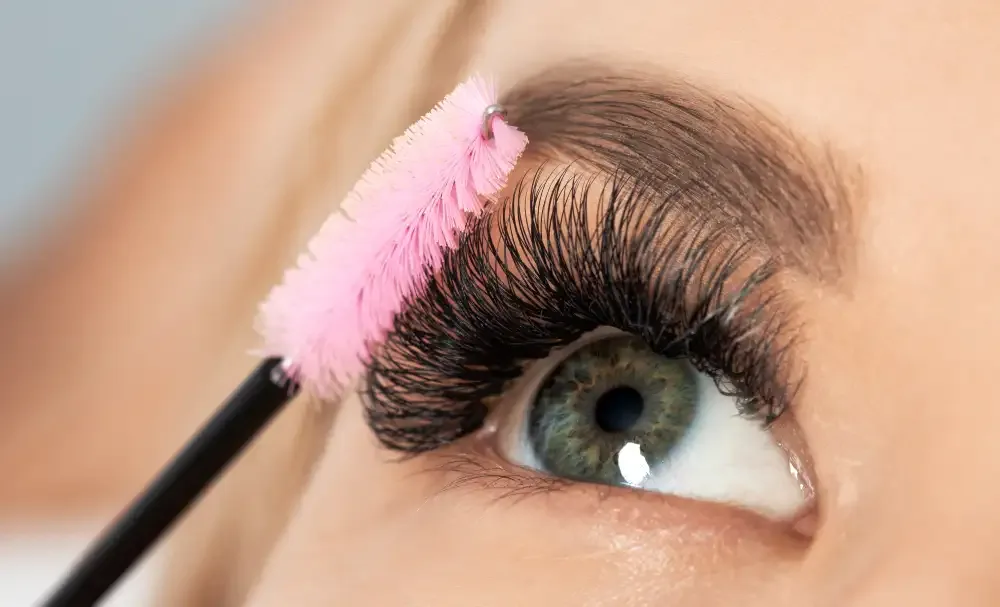
UV/LED eyelash extensions is a significant innovation that offers advantages, speed, durability and comfort. Reducing adhesive evaporation and immediate water resistance attract many customers. However, like any new technology, it requires a careful approach to security, especially in relation to UV radiation and composition of adhesives.
Consumers are advised to contact certified masters, using high-quality UV/LED systems, and discuss all potential risks. The future of this technology will depend on further research security and development of industry regulatory standards.